A Moroccan Rug That Asserts Its Personality
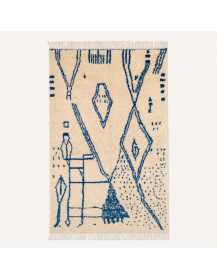
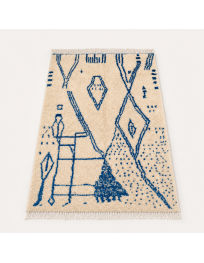
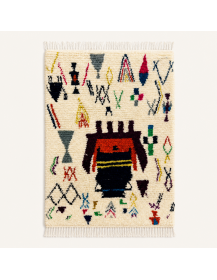
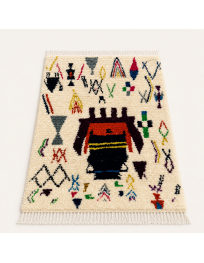
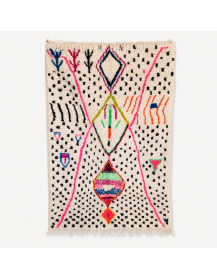
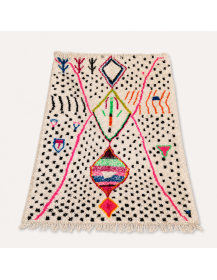
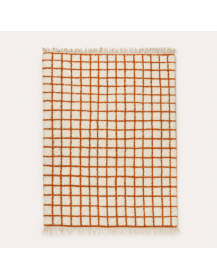
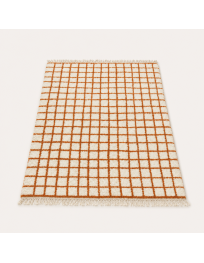
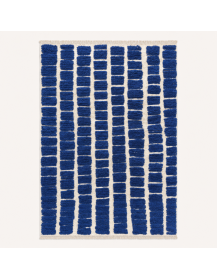
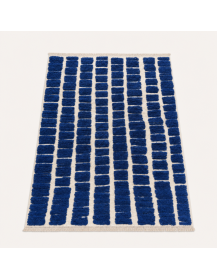
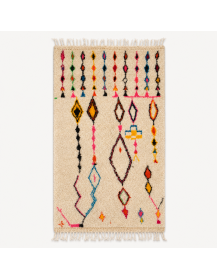
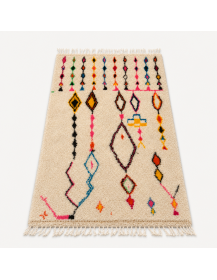
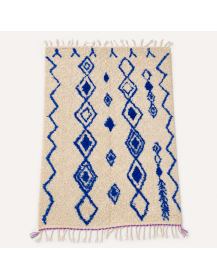
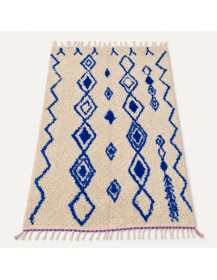
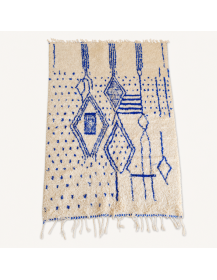
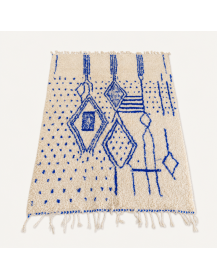
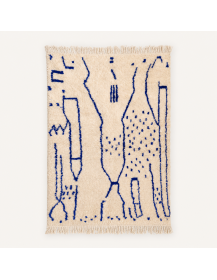
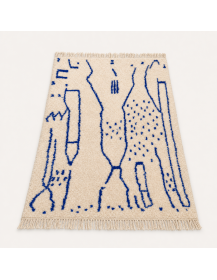
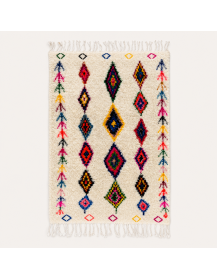
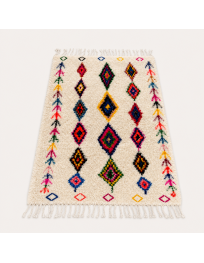
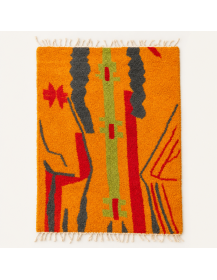
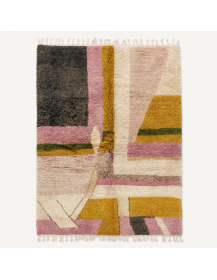
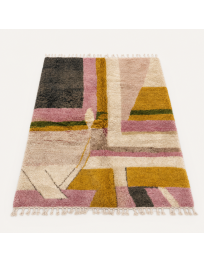
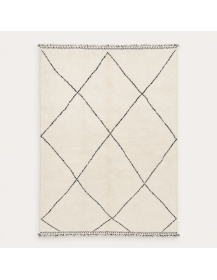
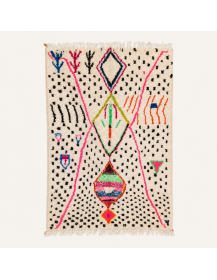
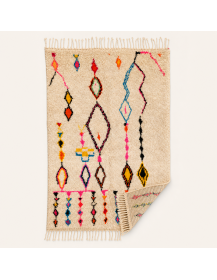
This handcrafted Moroccan rug captivates with the balance between the softness of an off-white ivory background and the energy of brightly colored geometric patterns. Red, fuchsia pink, orange, yellow, turquoise blue, dark blue, black, and green create an expressive palette, highlighted by a vertical arrangement in floating bands and columns.
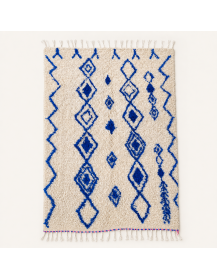
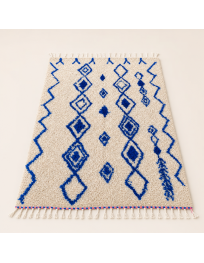
More than just a decorative element, it brings a warm and authentic presence to the room. Its abstract tribal design combines diamonds, almond shapes, vertical lines, zigzags, and small repetitive sequences. The composition intentionally remains asymmetrical, with spacing, outlines, and alignments that do not seek industrial regularity.
Material and Artisanal Craftsmanship
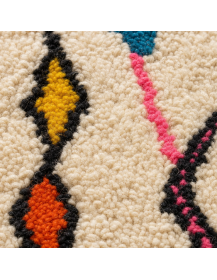
Made of wool, this rug features a dense, looped, and plush surface. The medium to relatively high pile height creates a material that is pleasant to look at and reveals subtle changes in direction, length, and density. These natural variations give the off-white background its lively and textured appearance.
The small visible irregularities in the pile, the slightly wavy edges, and the fibrous outlines of the patterns testify to its artisanal production in Morocco. Every detail contributes to the uniqueness of the piece: the shapes are not perfectly uniform, the fringes have varying lengths, and the finish retains the imprint of careful manual work.
A High-Color Geometric Composition
The rug’s main axis is punctuated by several independent columns. Large diamonds and almond-shaped motifs catch the eye, while the lines, zigzags, and small graphic sequences create a subtle movement. A denser geometric border near the lower edge enhances the overall visual depth.
The textile relief remains subtle to moderate: the contrast comes mainly from the color and woolly texture, with some perceptible height variations between the background and certain motifs. This tactile presence complements the decor without weighing it down.
How to Integrate It Into Your Interior
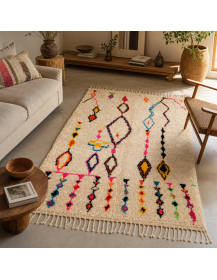
This colorful Berber rug will naturally find its place in a warm contemporary interior, a refined bohemian decor, or an eclectic atmosphere. Its off-white ivory background pairs easily with natural wood, linen, textured cotton, camel leather, rattan, and matte black metal.
The red, fuchsia, orange, yellow, and turquoise blue accents allow you to compose a lively space around a neutral base. Placed in a living room, bedroom, or living area, it becomes a decorative focal point while maintaining accessible artisanal elegance.
A Piece With Unique Character
The material’s irregularities, the slight waviness of the edges, the pattern asymmetries, and the off-white fringes on the two short sides are not flaws: they are part of the identity of this handcrafted Moroccan rug. They remind us that a non-industrial piece possesses its own expression, different from a perfectly standardized example.
With its blend of textured wool, vivid colors, and geometric patterns inspired by the Berber world, this rug brings a touch of Moroccan tradition to contemporary decor.
Decorating Tips
- Pair the off-white ivory background with natural materials like light wood, linen, rattan, or textured cotton.
- Echo one or two colors from the motifs in cushions, throws, or accessories to create a cohesive look.
- Let the rug become the standout piece of the decor by accompanying it with furniture featuring simple lines.
- Combine the colorful accents with a palette of ivory, off-white, terracotta, matte black, or turquoise tones.
- Favor diffuse natural light or warm lighting to reveal the wool’s looped texture and its relief nuances.
Care Instructions
- Gently maintain the surface to preserve the looped texture and the natural variations of the fibers.
- Avoid pulling on the fringes and handle them gently when moving the rug.
- Protect the material from prolonged exposure to direct light to preserve the color harmony.
- In case of stains, act quickly and carefully, preferably consulting a professional experienced with wool rugs.
- Variations in height, density, and fiber orientation are part of the artisanal character of the piece.


 Français
 English
 Dansk
Dansk Deutsch
 Italiano
 Español
 Nederlands
 Svenska
 Čeština
 Português BR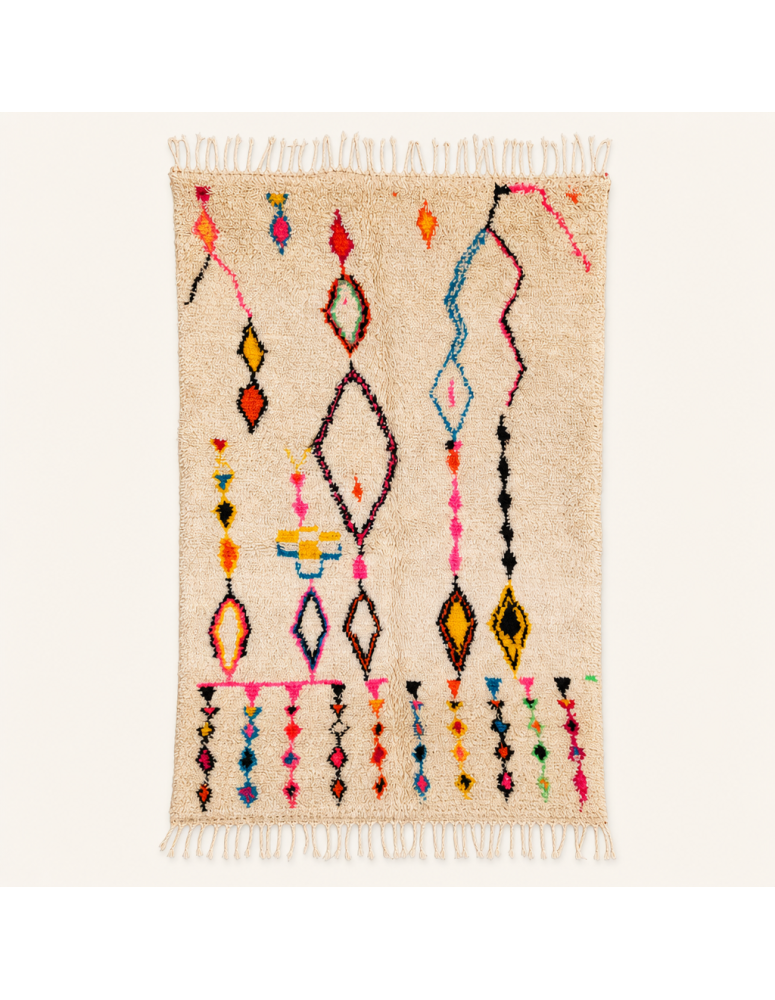
 100% Secure Payment
 International Manufacturing & Shipping
 Returns & Refunds