A Moroccan Rug Shaped by Its Material
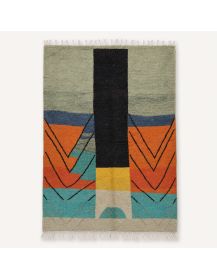
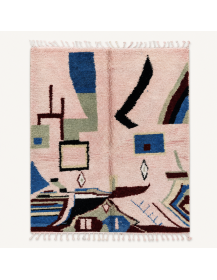
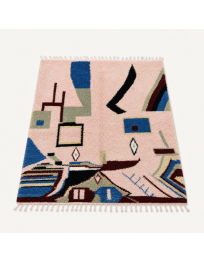
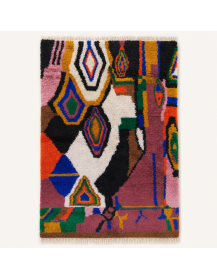
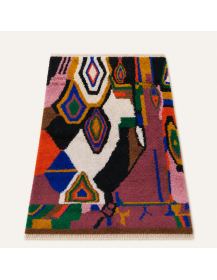
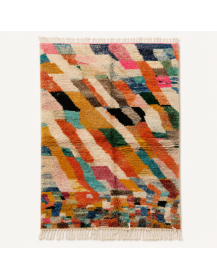
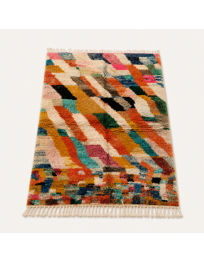
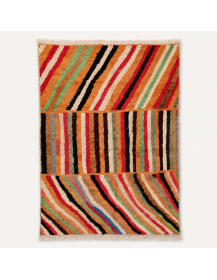
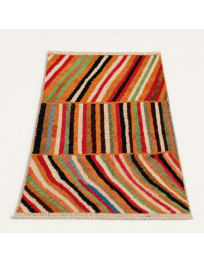
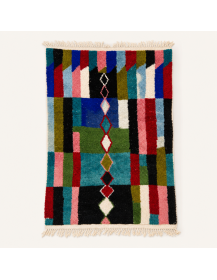
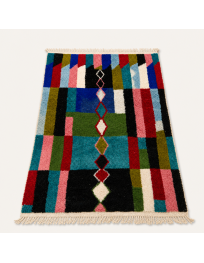
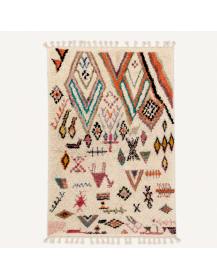
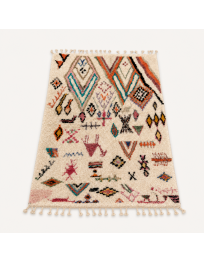
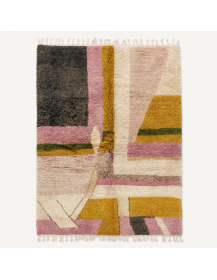
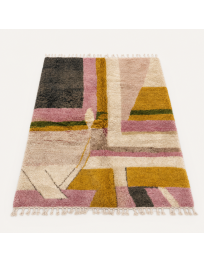
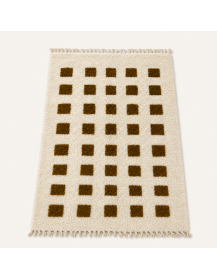
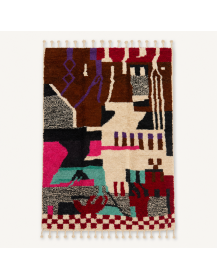
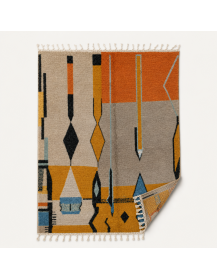
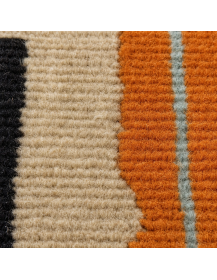
This artisanal Moroccan rug expresses the full richness of traditional textile craftsmanship through a contemporary composition. Made of wool, it captivates with its dense, matte, and slightly fibrous surface, whose variations in direction and compression bring the design to life. Here, the material does not merely accompany the pattern: it fully constitutes its identity.
The horizontal rows of pile, the soft down, and the slight undulations of the surface testify to handcrafted production. The outlines do not seek industrial perfection; on the contrary, they retain subtle shifts, irregular tensions, and natural transitions that make the rug unique.
An Abstract Geometry with Contemporary Accents
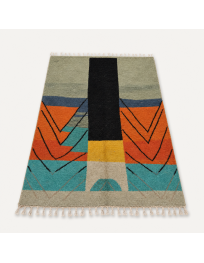
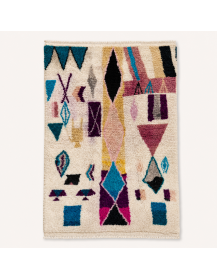
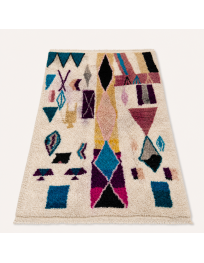
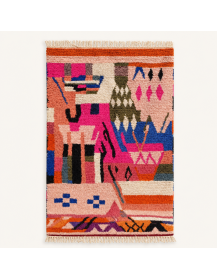
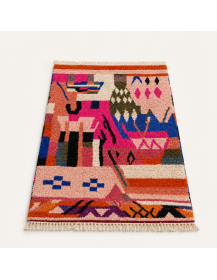
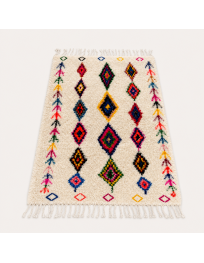
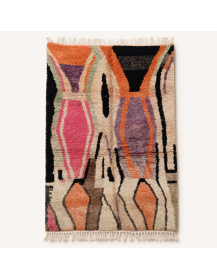
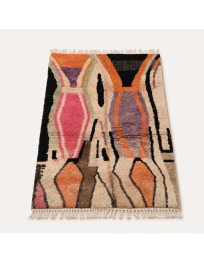
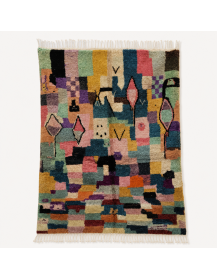
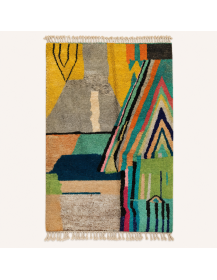
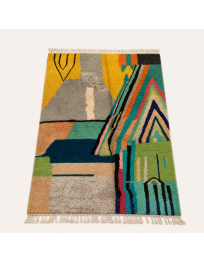
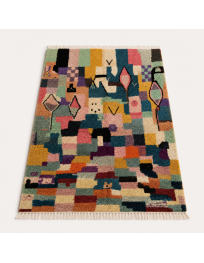
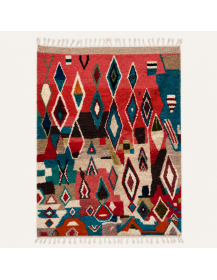
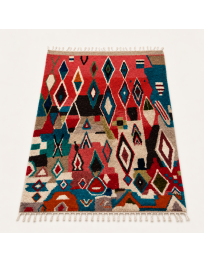
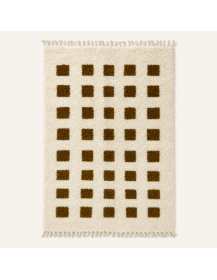
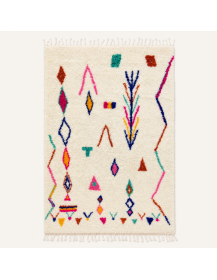
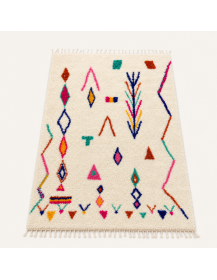
The design is organized around vertical bands, elongated bars, stepped shapes, diamonds, and triangles. These elements interact in an asymmetrical composition, without a conventional border, punctuated by colored blocks and a horizontal band in the lower part.
Warm greige and beige form a soft and luminous base. Touches of burnt orange, ochre mustard yellow, black, desaturated sky blue, pale turquoise, and off-white rhythm the whole with character. This palette allows the rug to fit seamlessly into both contemporary decor and eclectic, warm interiors inspired by art.
The Charm of a Non-Industrial Work
This Beni Ouarain rug asserts a decorative presence while maintaining natural elegance. Its surface presents a subtle textile relief, created by variations in the pile and slightly compressed rows, rather than a pronounced sculpted relief. The visible irregularities contribute to its authenticity and recall the manual gesture at the origin of its making.
The short fringes, white or off-white, extend the two small sides with intentionally irregular spacing and lengths. They highlight the artisanal dimension of the piece and reinforce its appearance as a carefully crafted Moroccan textile.
Pairing Ideas
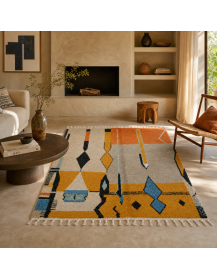
In a living room, this artisanal Moroccan rug goes well with light or medium wood, natural textiles in wool or cotton, matte black metal, and brushed or aged brass finishes. It also finds its place on a floor accompanied by textured plaster walls or mineral materials.
To preserve the balance of its geometric pattern, pair it with a base of warm white, sand, greige, terracotta, ochre, or charcoal tones. Soft, warm lighting will highlight its rows of pile, nuances, and the discreet depth of its color blocks.
Decorating Tips
- Place it in a contemporary, eclectic, or warmly minimalist living room.
- Combine its greige, beige, ochre, and burnt orange tones with natural wood, wool or cotton textiles, and matte black metal.
- Use warm, diffuse lighting to enhance the rows of pile and texture variations.
- Allow its asymmetrical composition to breathe by pairing it with furniture featuring simple lines.
- Echo one or two shades from the pattern in cushions, throws, or decorative objects to create a harmonious ensemble.
Care Tips
- Vacuum gently to respect the dense and slightly fibrous texture of the wool.
- Avoid harsh products and interventions that could damage the fibers or color nuances.
- For thorough maintenance, seek the advice of a professional specialized in wool rugs.
- Keep the rug in a dry environment and regularly air out the room.


 Français
 English
 Dansk
Dansk Deutsch
 Italiano
 Español
 Nederlands
 Svenska
 Čeština
 Português BR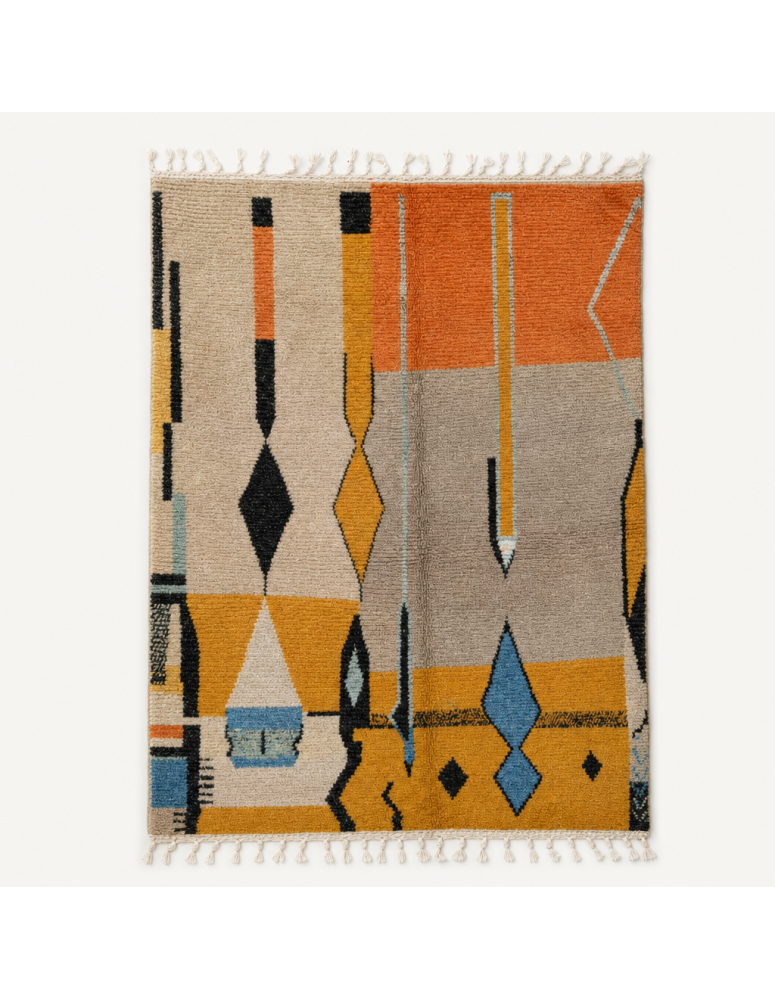
 100% Secure Payment
 International Manufacturing & Shipping
 Returns & Refunds