A Moroccan Handmade Rug with a Unique Character
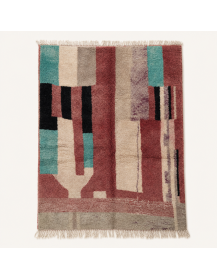
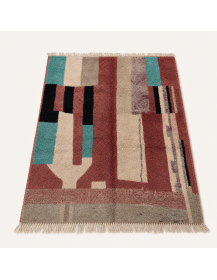
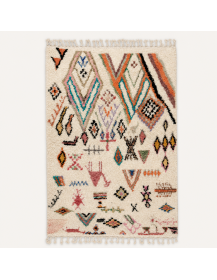
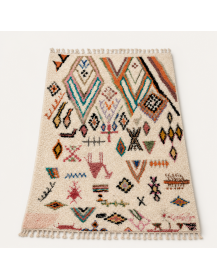
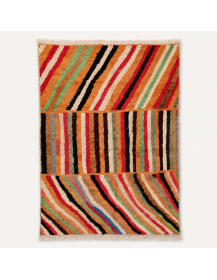
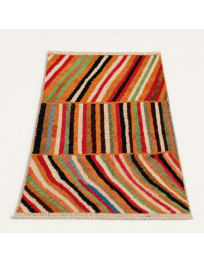
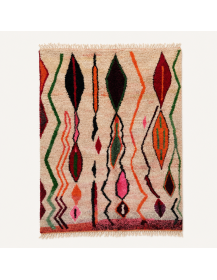
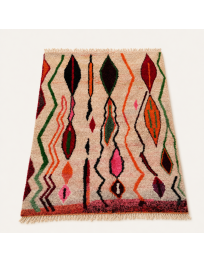
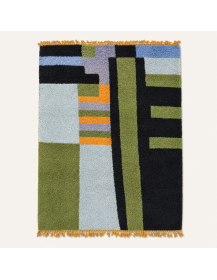
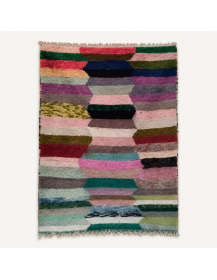
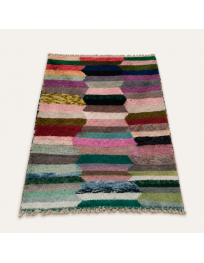
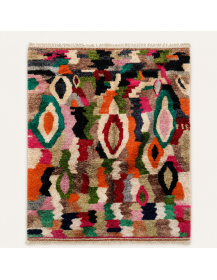
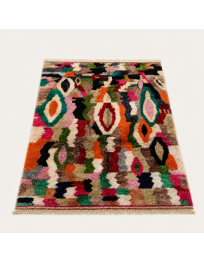
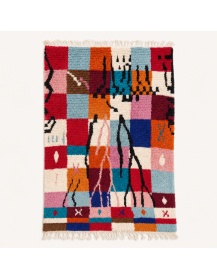
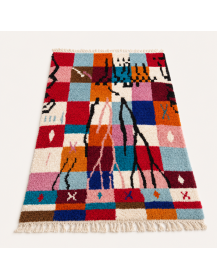
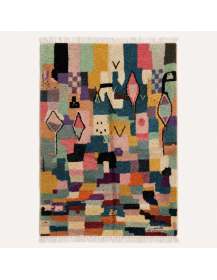
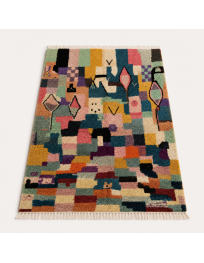
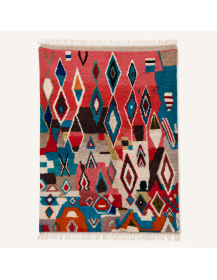
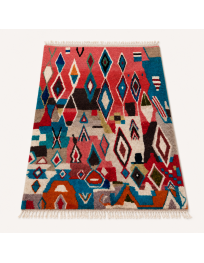
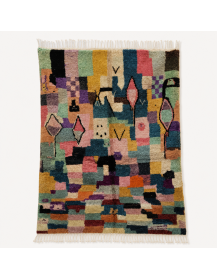
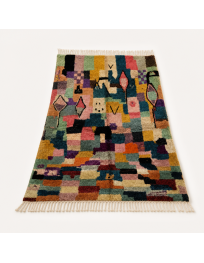
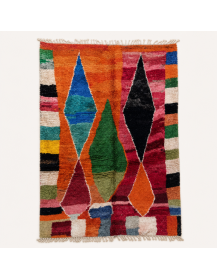
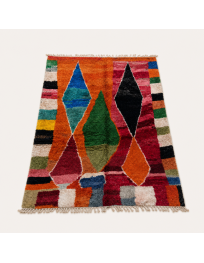
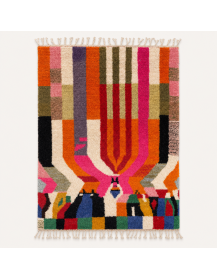
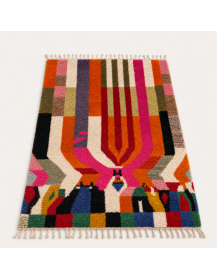
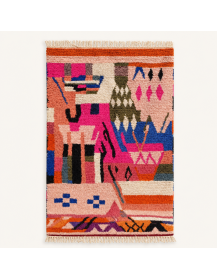
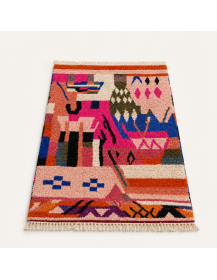
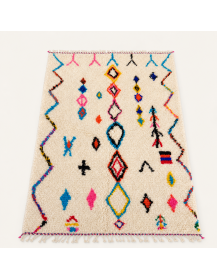
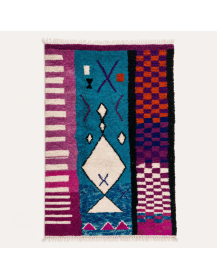
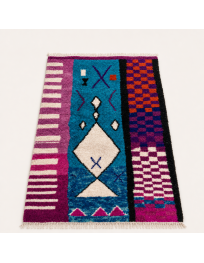
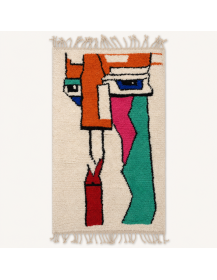
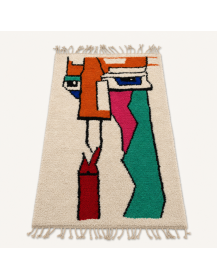
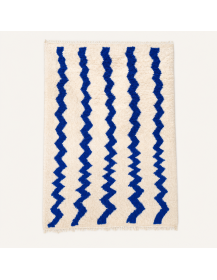
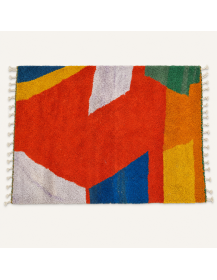
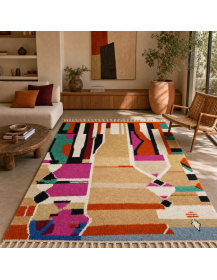
This wool rug expresses the full richness of a living Moroccan craft, where material and gesture give birth to a truly personal piece. Its rectangular composition stands out with an abstract and geometric organization, deliberately asymmetrical, made up of bands, fragments, and irregular shapes.
Far from a perfectly calibrated industrial pattern, its slightly wavy contours, alignment variations, and nuanced proportions testify to an artisanal creation. Each color zone seems to find its place in a spontaneous balance, resulting in a decorative effect that is both contemporary, warm, and authentic.
A Geometric Composition Rich in Colors
The eye first rests on a wide center of cream, white, and sand, which brings light and softness to the whole. Around this light field unfolds a dense play of vertical bars, horizontal bands, irregular polygons, and fragmented blocks.
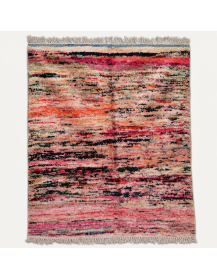
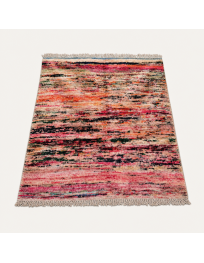
Black and charcoal structure the composition while brick red, terracotta orange, burgundy, and magenta give it depth. Touches of turquoise, emerald green, ochre, tan beige, and pale blue introduce lively contrasts. This multicolored palette allows the rug to harmonize with interiors in warm white, sand, camel, terracotta, charcoal, or burgundy tones.
The Natural Presence of Wool
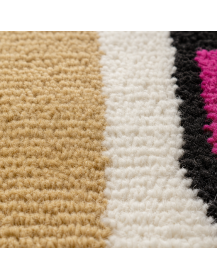
The wool here offers a dense, compact, and plush surface, with a visibly soft touch and a slightly fuzzy texture. The short fibers display small natural variations in direction and level, particularly noticeable in the light. This material brings a warm presence to the floor and enhances the visual depth of the colored areas.
The relief remains mainly graphic and lightly sculpted: the appeal comes from the combination of wool’s softness, color contrasts, and subtle surface irregularities. The edges of the patterns are not perfectly straight, preserving the authentic expression of a Moroccan handmade rug.
Finishes That Tell the Artisan’s Gesture
Short wool fringes, flexible and hand-twisted, extend the two narrow sides of the rug. Their irregular length, varied spacing, and visible knots fully contribute to its charm. These details are not imperfections to hide: they highlight the non-industrial character of the piece and the uniqueness of its making.
With its contemporary tribal abstract design and Moroccan craftsmanship perceptible in every detail, this Beni Ouarain rug brings a strong identity without weighing down the decor. It suits both a carefully composed bohemian atmosphere and a more minimalist contemporary interior seeking an accent piece.
A Strong Piece for the Contemporary Interior
Placed in a living room, it can accompany light or medium wood furniture, natural linen household linens, leather, matte black metal, ceramics, or rattan. Its generous palette allows creating a connection between several decorative elements while maintaining a bright anchor point thanks to its cream and white center.
To best reveal its texture and contrasts, favor soft natural light or warm ambient lighting. This Moroccan handmade rug is designed as a stand-alone decorative piece: an expressive textile presence shaped by material, color, and the nuances of artisanal gesture.
Decorating Tips
- Pair it with light or medium wood, natural linen, leather, rattan, or matte black metal.
- Use it as a statement piece in a contemporary, eclectic, bohemian, or minimalist architectural interior.
- Echo some of the rug’s shades in accessories: terracotta, camel, charcoal, burgundy, or soft turquoise.
- Favor soft natural light or warm ambient lighting to reveal the wool’s softness and colorful contrasts.
- Let its dense composition breathe by accompanying it with sober volumes and natural materials.
Care Tips
- Preserve the texture and nuances of the wool by avoiding pulling on fibers or fringes.
- Handle the fringes delicately to maintain their natural twist and spacing.
- Height variations, fiber direction, and contour irregularities are part of the piece’s artisanal character.
- If in doubt about care, seek advice from a professional experienced with wool rugs.


 Français
 English
 Dansk
Dansk Deutsch
 Italiano
 Español
 Nederlands
 Svenska
 Čeština
 Português BR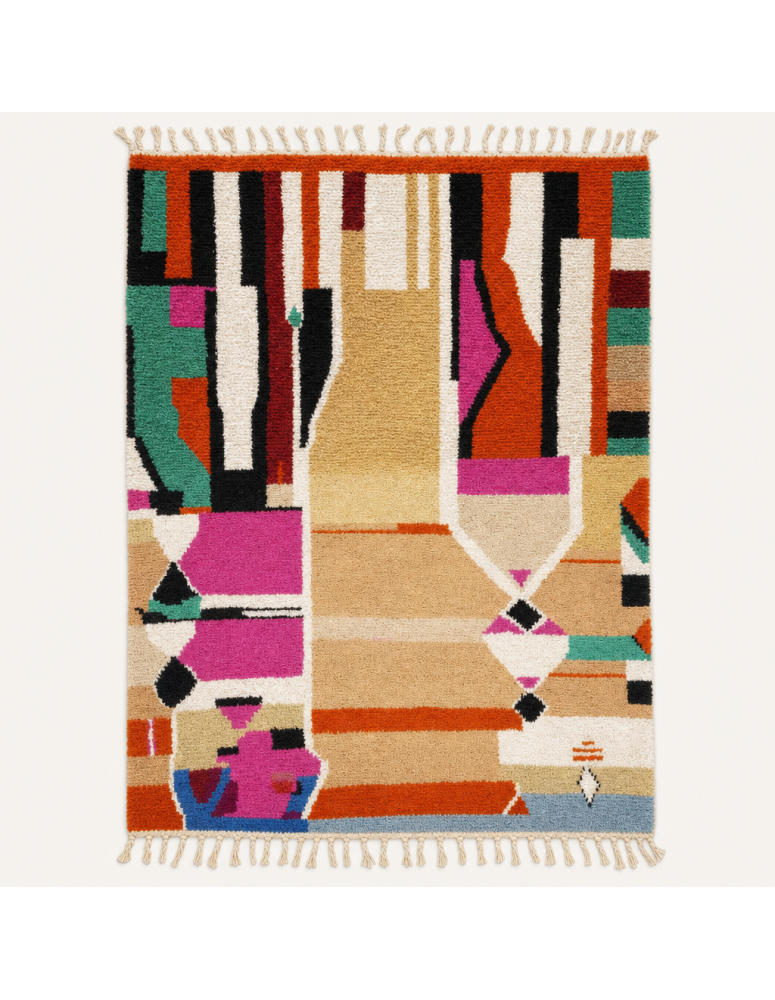
 100% Secure Payment
 International Manufacturing & Shipping
 Returns & Refunds