A Moroccan Rug Shaped by Material
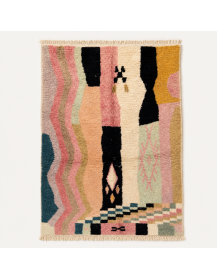
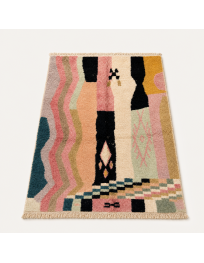
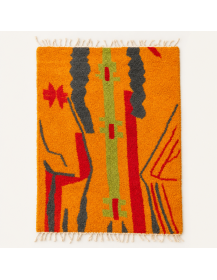
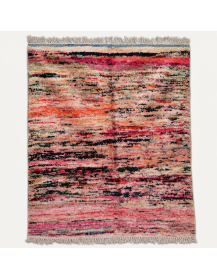
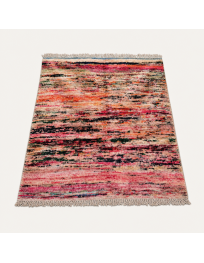
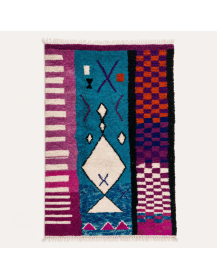
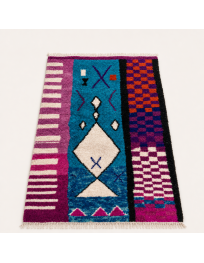
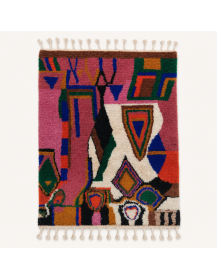
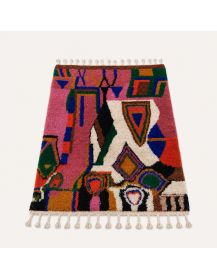
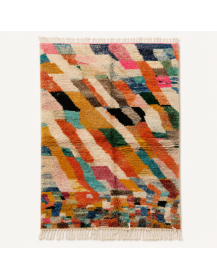
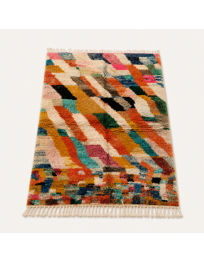
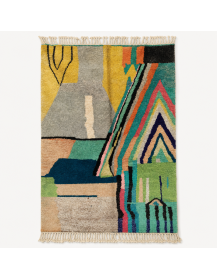
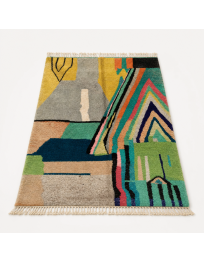
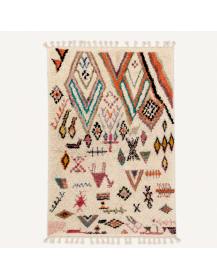
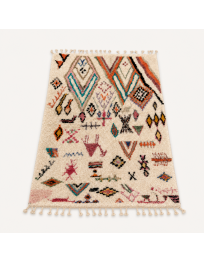
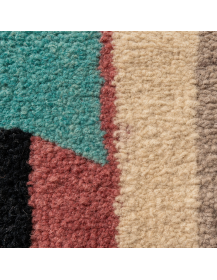
This handcrafted Moroccan wool rug asserts a unique decorative presence. Its soft, dense, and slightly shaggy surface retains the variations in direction, height, and density typical of handmade craftsmanship. Here, the material does not seek uniform perfection: on the contrary, it expresses the gesture, time, and traditional expertise of Moroccan artisans.
The subtle irregularities of the edges, the undulations of the surface, and the slightly compressed areas give the rug a unique personality. Every detail contributes to its authentic appearance and sets this piece apart from standardized industrial production.
A Geometric Patchwork in Deep Tones
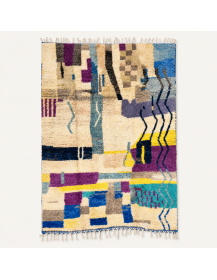
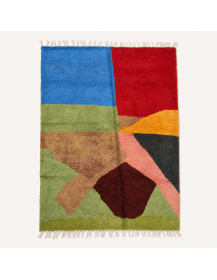
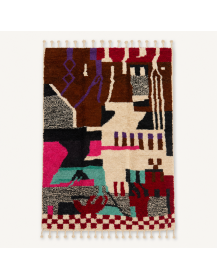
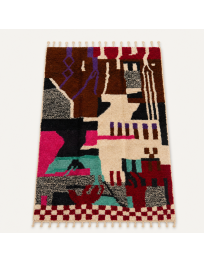
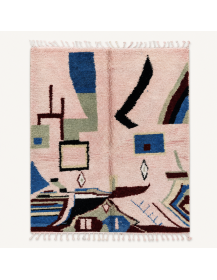
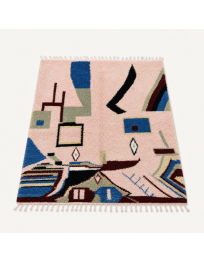
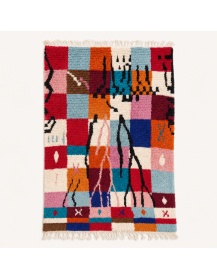
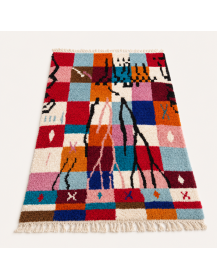
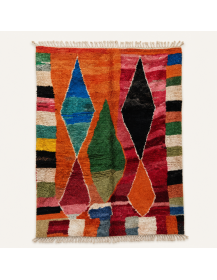
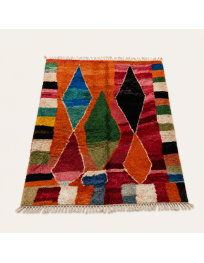
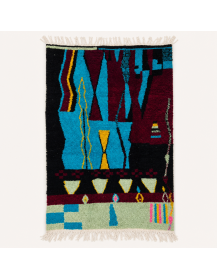
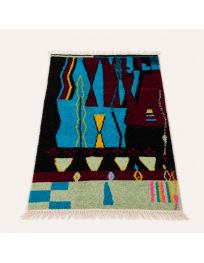
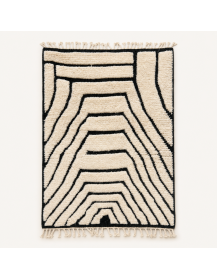
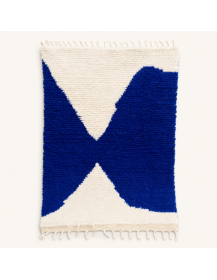
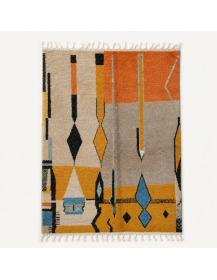
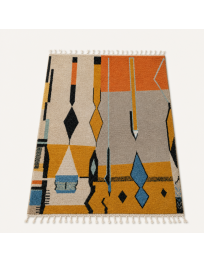
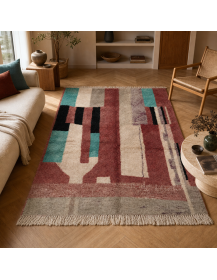
The composition is organized around large asymmetrical fields, vertical blocks, narrow bars, stair-step shapes, and fragmented divisions. The whole forms an abstract geometric pattern, without a central medallion or repetitive border. The boundaries between the modules remain slightly irregular, as if drawn by the wool fibers rather than by a perfectly mechanical line.
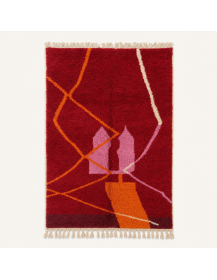
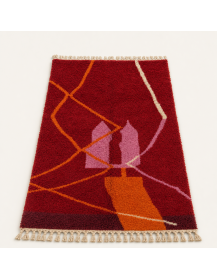
The muted burgundy and dusty wine red dominate the composition. They converse with touches of muted turquoise, cream, warm ivory, gray taupe, muted mauve, black, and pale sage gray. This nuanced palette allows the rug to fit equally well in a contemporary interior or an eclectic, warm, or art-inspired décor.
A Handcrafted Piece with Subtle Relief
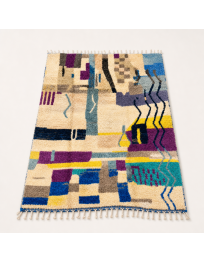
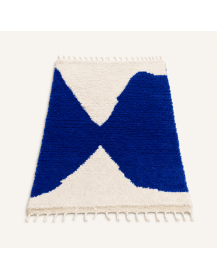
The visual relief, subtle to moderate, is revealed through changes in the pile direction and density differences between the colored areas. Some burgundy, turquoise, and pale fields appear more raised, while the cream, gray, or black bands offer a calmer reading. This depth remains tied to the authentic texture of the wool and the artisanal finish of the rug.
The slightly wavy edges, the uneven finish, and the natural fringes on the two short sides complete its character. The strands vary in length and show some intertwinings, highlighting the charm of a handmade rug rather than a mass-produced model.
How to Integrate It into Your Décor
With its expressive design, this geometric Berber rug can become the focal piece of a living room, reading nook, or contemporary interior. It naturally pairs with light or medium wood, linen, boucle textiles, matte ceramics, and brushed or patinated metals. To accompany its burgundy and turquoise shades, favor a base made of warm ivory, sand, taupe, charcoal gray, or soft mauve.
Soft natural light or warm lighting at multiple points will better highlight the variations in the velvet, color nuances, and the wool’s relief.
The Authenticity of a Unique Moroccan Rug
This wool rug carries the beauty of objects made with patience and expertise. Its deliberately asymmetrical geometry, fiber variations, and irregular finishes make each piece personal. It is not simply a decorative rug, but an element of material and character, designed to bring a high-end artisanal touch accessible to a modern interior.
Decorating Tips
- Place it in a contemporary, eclectic, warm, or art-inspired interior to let its abstract pattern express itself.
- Combine its burgundy and turquoise shades with ivory, sand, taupe, charcoal gray, or soft mauve tones.
- Let its texture dialogue with wood, linen, boucle, matte ceramics, or brushed metal.
- Use furniture with simple lines to preserve the readability of its asymmetrical geometric blocks.
- Diffuse natural light or warm lighting will enhance the pile variations and the subtle wool relief.
Care Tips
- Vacuum gently and regularly, without using excessive power to preserve the wool fibers and fringes.
- Avoid pulling on the strands or fringes; gently reposition them by hand if necessary.
- In case of a stain, act quickly by blotting with a clean cloth, without rubbing the surface.
- For thorough cleaning, call on a professional experienced with wool rugs and artisanal pieces.
- Wool may show natural variations in texture and height; these are part of the rug’s authentic character.


 Français
 English
 Dansk
Dansk Deutsch
 Italiano
 Español
 Nederlands
 Svenska
 Čeština
 Português BR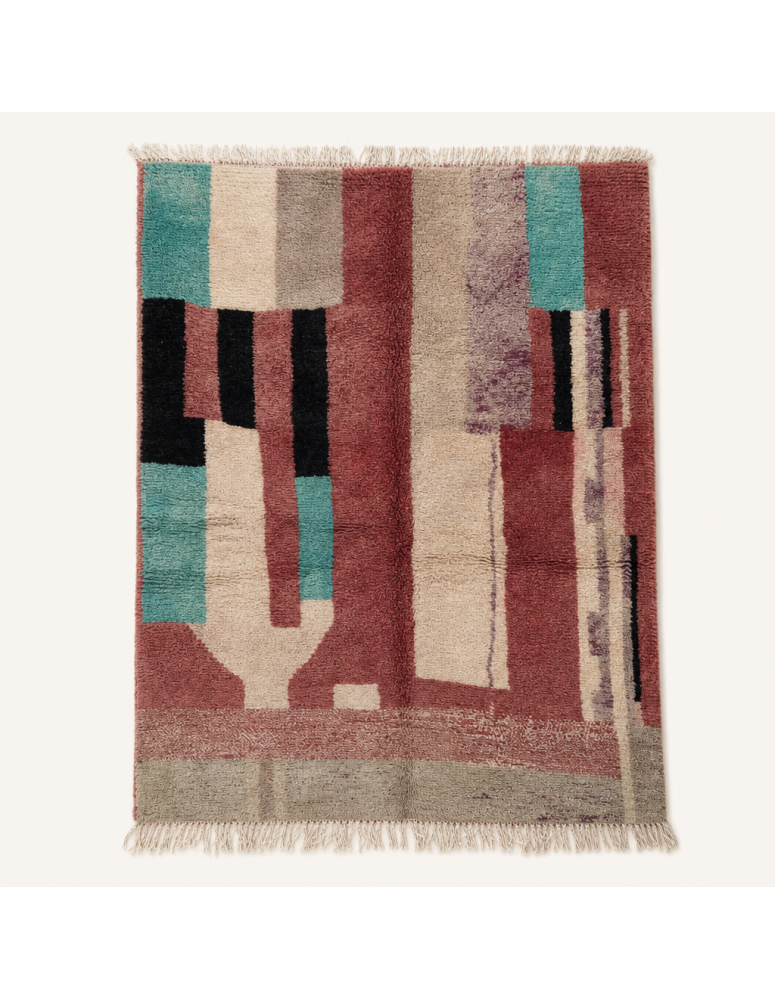
 100% Secure Payment
 International Manufacturing & Shipping
 Returns & Refunds